
Retatrutide Research Hub
The GLP-1, GIP and glucagon triple agonist: how it differs from tirzepatide and semaglutide, how it is handled, and lab vials from 5 mg to 120 mg.
What is retatrutide?
Retatrutide is a synthetic 39-amino-acid peptide that activates three receptors: GLP-1, GIP, and glucagon. It is the newest member of the GLP-1 family in active research, and its published literature is expanding quickly. Its CAS number is 2381089-83-2 and its molecular weight is about 4731 Da.
The glucagon-receptor activity is what separates it from semaglutide (GLP-1 only) and tirzepatide (GLP-1 and GIP), and it is the subject of research into energy expenditure, lipid metabolism, and hepatic glucose handling. QSC supplies retatrutide strictly for laboratory research.
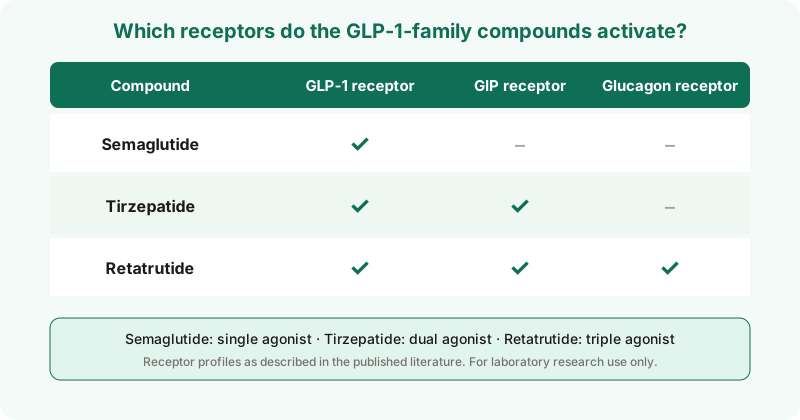
Receptor profiles of semaglutide, tirzepatide and retatrutide as described in the literature.
Start here: research guides
- 6 min readRetatrutide: A Triple Agonist in Metabolic ResearchWhat separates a glucagon-pathway-inclusive analog from the GLP-1 and GLP-1+GIP compounds it follows.Read article
- 6 min readChoosing a Retatrutide Vial Size: 5 mg to 120 mgWhat changes between a 5 mg and a 120 mg retatrutide vial, how to work out stock concentration, and how to match vial size to how fast you will use the solution.Read article
- 8 min readTirzepatide vs Semaglutide: A Research Comparison of GLP-1 Family AnalogsReceptor profile, pharmacokinetics, and practical considerations for choosing between the two most-studied GLP-1 family peptides.Read article
- 5 min readMazdutide and Survodutide: GLP-1/Glucagon Dual AgonistsWhy add glucagon-receptor activity to a GLP-1 agonist, and how these two compounds differ from tirzepatide and retatrutide.Read article
Lab vials
Retatrutide in eleven vial sizes from 5 mg to 120 mg, plus a pre-mixed 1:1 retatrutide + tirzepatide research blend (30 mg + 30 mg per vial). All are supplied as lyophilized powder in 10-vial packs.

Retatrutide 5mg — 10-Vial Pack
RT-2605 · 99.2%
$111.92

Retatrutide 10mg — 10-Vial Pack
RT-2605 · 99.2%
$175.92

Retatrutide 15mg — 10-Vial Pack
RT-2605 · 99.2%
$255.92

Retatrutide 20mg — 10-Vial Pack
RT-2605 · 99.2%
$295.92

Retatrutide 30mg — 10-Vial Pack
RT-2605 · 99.2%
$375.92

Retatrutide 40mg — 10-Vial Pack
RT-2605 · 99.2%
$447.92

Retatrutide 50mg — 10-Vial Pack
RT-2605 · 99.2%
$519.92

Retatrutide 60mg — 10-Vial Pack
RT-2605 · 99.2%
$591.92

Retatrutide 80mg — 10-Vial Pack
RT-2605 · 99.2%
$735.92

Retatrutide 100mg — 10-Vial Pack
RT-2605 · 99.2%
$879.92

Retatrutide 120mg — 10-Vial Pack
RT-2605 · 99.2%
$1023.92

Retatrutide + Tirzepatide 60mg — 10-Vial Pack
RE-2609 · Blend
$311.92
Retatrutide · Questions
What is retatrutide?
+
Retatrutide is a synthetic 39-amino-acid triple agonist of the GLP-1, GIP, and glucagon receptors (CAS 2381089-83-2, about 4731 Da). It is studied in research on metabolism, energy expenditure, and lipid handling.
How is retatrutide different from tirzepatide and semaglutide?
+
Semaglutide activates the GLP-1 receptor. Tirzepatide activates the GLP-1 and GIP receptors. Retatrutide adds activity at the glucagon receptor, which is the basis of research into energy expenditure and hepatic lipid and glucose handling that the other two do not address in the same way.
What is retatrutide studied for?
+
Research areas include energy expenditure, lipid metabolism, and hepatic glucose handling, alongside comparative incretin-pathway studies against single and dual agonists. The literature is expanding quickly, and results should be read against the specific model and assay conditions used.
Which retatrutide vial size should I choose?
+
QSC supplies 5, 10, 15, 20, 30, 40, 50, 60, 80, 100 and 120 mg vials. Choose by stock concentration and how quickly you will use the solution: a 10 mg vial in 2 mL gives 5 mg/mL, and a 100 mg vial in 10 mL gives 10 mg/mL. Check the vial capacity before adding solvent.
How do I reconstitute and store retatrutide?
+
Reconstitution at 5 to 10 mg/mL in sterile water is most commonly cited. Because its triple-receptor profile is sensitive to assay conditions, confirm your protocol before bulk procurement. Keep lyophilized powder at -20°C for long-term storage and refrigerate after reconstitution.
Are prices per vial or per pack?
+
Prices are per 10-vial pack of one size. Email us to arrange a smaller order at the same per-vial price. Orders of $1,000 or more ship free, and delivery is typically about 10 to 15 days, duties paid.
What is the retatrutide + tirzepatide blend?
+
It is a pre-mixed 1:1 research blend of retatrutide and tirzepatide, 30 mg of each per vial (60 mg total), for protocols that use both compounds together and prefer one reconstitution step.
Is retatrutide approved for human use?
+
The research-grade material QSC supplies is not approved for human or veterinary use and is sold strictly for laboratory research. Nothing on this site is medical advice.
Published by QSC Peptidology for research-community reference. Not medical advice, and not a recommendation for human or veterinary use. All products are sold strictly for laboratory and research use only.