
GHK-Cu vs AHK-Cu: Comparing Two Copper Tripeptides in Research
Two close relatives that differ by a single amino acid, and how researchers choose between them.
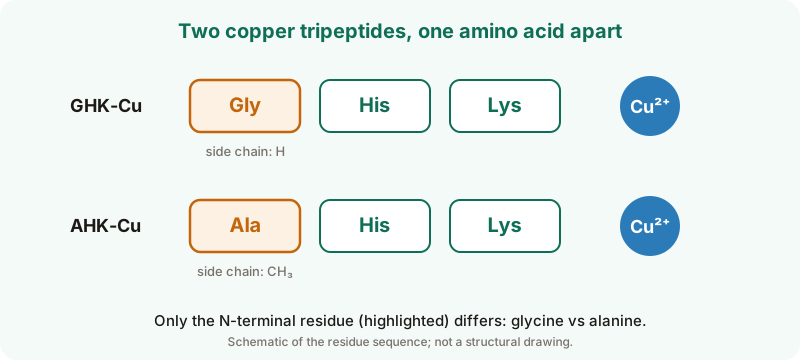
GHK-Cu and AHK-Cu are both copper(II) complexes of tripeptides that share the same two C-terminal residues, histidine and lysine. They differ at the N-terminus: GHK-Cu begins with glycine (Gly-His-Lys), AHK-Cu begins with alanine (Ala-His-Lys). That single substitution makes AHK-Cu a close structural analog, and the two are often used together in comparative copper-peptide studies.
How are they alike?
Both peptides bind copper(II) through the histidine imidazole and neighbouring backbone nitrogens, both are supplied as the pre-formed copper complex, and both are blue. Both are studied in dermal and hair-follicle models, and both are sensitive to acidic buffers and chelators that can pull copper off the peptide.
How do they differ?
GHK-Cu has a much larger body of literature. It was first isolated from human plasma in 1973, it occurs naturally in the body, and it is the subject of the large majority of published copper-peptide work on collagen production, wound healing, inflammation, and gene expression.
AHK-Cu is a synthetic analog. The evidence base is smaller and comes mostly from cosmetic-ingredient literature and cell-based hair-follicle and dermal models. A reported difference in copper-binding affinity between the two is the reason it is used for comparison, but head-to-head data are limited, and neither peptide has been shown to be better across the board.
Handling differences
QSC's handling guidance differs by peptide. GHK-Cu is typically reconstituted at 5 to 10 mg/mL in sterile water, while AHK-Cu is supplied with a more dilute guideline of 1 to 2 mg/mL. Both are stored as lyophilized powder at -20°C for long-term storage and refrigerated after reconstitution, with acidic diluents avoided.
How do researchers choose?
The choice follows the question. For work on dermal collagen, wound healing, and the broader mechanistic literature, GHK-Cu is the default because there is more published data to design against. For studies that ask what the glycine-to-alanine change does to copper binding or to hair-follicle endpoints, AHK-Cu is used alongside it as a comparator.
QSC supplies GHK-Cu and AHK-Cu in 10-vial packs of 50 mg and 100 mg vials. Both are for laboratory research use only.


