
GHK-Cu (Copper Peptide): What It Is, How It Works, and What the Research Shows
A reference overview of glycyl-L-histidyl-L-lysine copper(II): its discovery, proposed mechanisms, research applications, and the limits of the evidence.
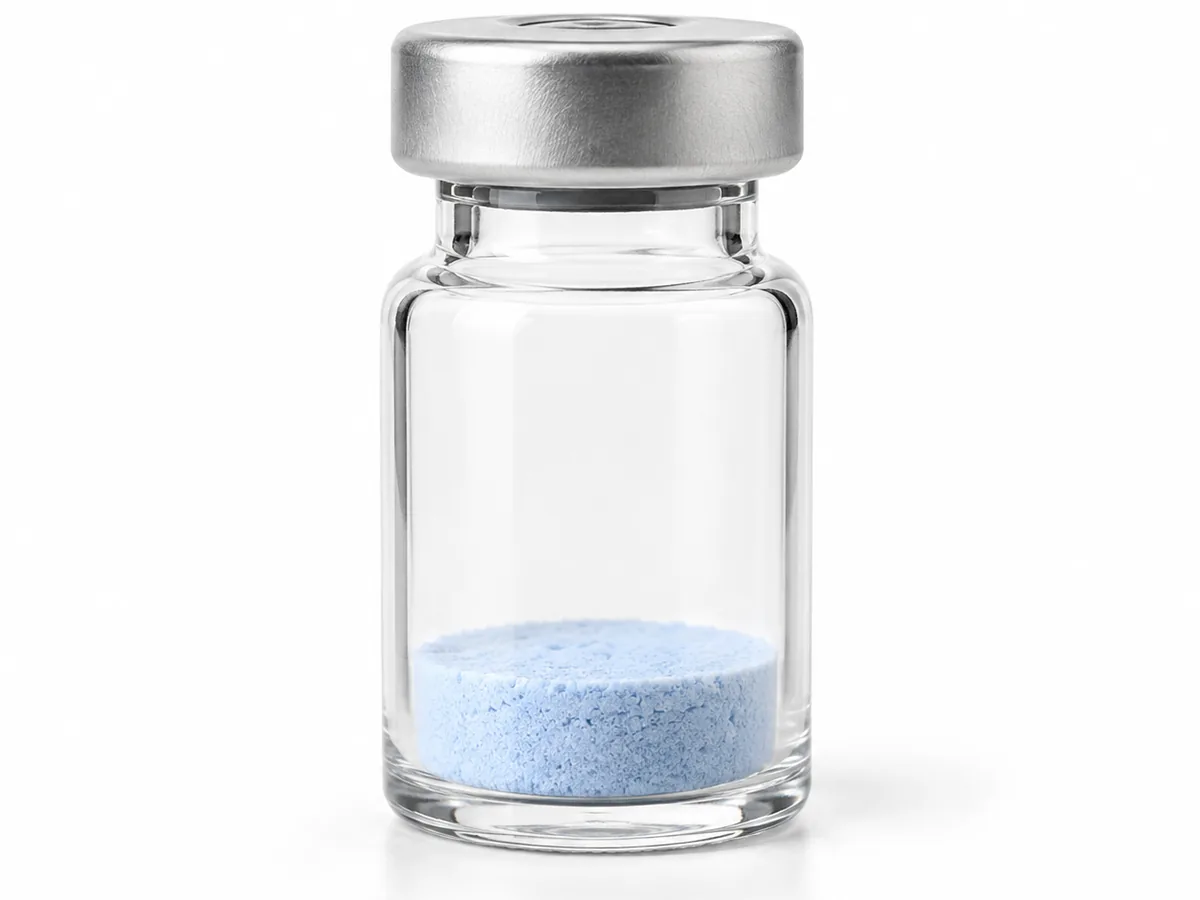
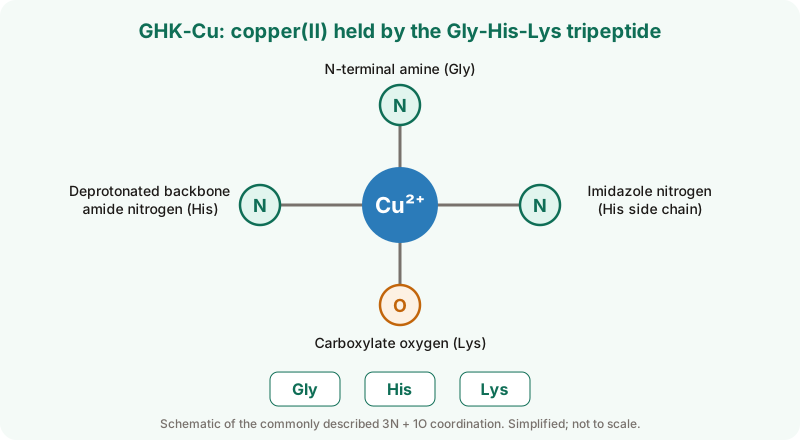
GHK-Cu, also called copper peptide, GHK copper, Cu-GHK, or copper tripeptide-1 (its cosmetic ingredient name), is the copper(II) complex of the tripeptide glycyl-L-histidyl-L-lysine (Gly-His-Lys). Its CAS number is 89030-95-5 and its molecular weight is about 403 Da. The peptide binds copper(II) with high affinity, and the resulting complex, which is blue, is the form used in almost all published research.
Where does GHK-Cu come from?
GHK was first isolated from human plasma in 1973 by Loren Pickart, who was studying a plasma factor that made liver tissue from older donors behave more like tissue from younger donors. The tripeptide occurs naturally in plasma, saliva, and urine. Published surveys report that plasma levels decline with age, from roughly 200 ng/mL in young adults to around 80 ng/mL by age 60, which is part of why the peptide has attracted interest in ageing research.
The sequence also appears inside larger proteins such as collagen, which led to the idea that GHK may be released when tissue is damaged and act as a signal that repair is needed. That idea is a hypothesis drawn from in-vitro and animal work, not a settled fact.
How does GHK-Cu work in research models?
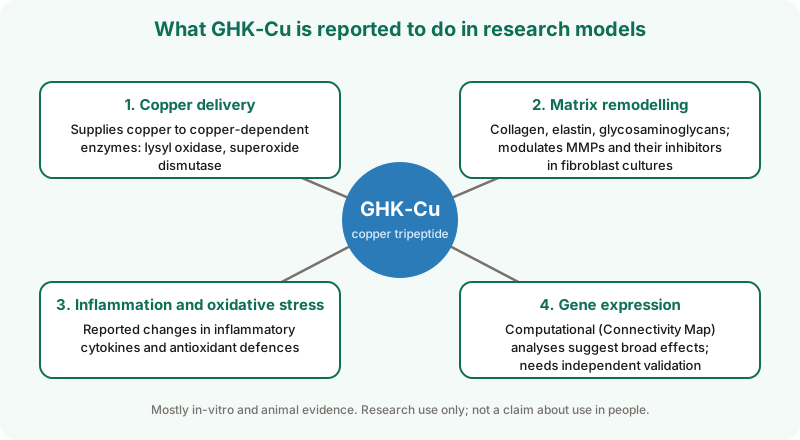
Four mechanisms recur in the literature. First, copper delivery: GHK-Cu is reported to supply copper to cells and to copper-dependent enzymes, including lysyl oxidase, which cross-links collagen and elastin, and superoxide dismutase, an antioxidant enzyme. Second, extracellular-matrix remodelling: in dermal fibroblast cultures it has been reported to increase collagen, elastin, and glycosaminoglycan synthesis and to modulate matrix metalloproteinases and their inhibitors.
Third, inflammation and oxidative stress: studies report changes in inflammatory cytokine expression and antioxidant defences. Fourth, gene expression: computational analyses using the Connectivity Map database reported that GHK influences the expression of a large number of human genes, with patterns consistent with tissue-repair and anti-inflammatory programmes. That analysis comes largely from one research group and would benefit from independent validation.
What is GHK-Cu studied for?
The largest body of work is in dermal biology: fibroblast collagen production, wound-healing models in rodents, and skin-remodelling assays. Hair-follicle research is smaller but active, with reports of changes in follicle size and cycle in cell and animal models. Other areas include anti-inflammatory signalling, angiogenesis assays, and tissue-repair models outside the skin.
For a deeper look at the skin and collagen literature specifically, see our article on GHK-Cu in skin and collagen research.
What the evidence does and does not show
Most GHK-Cu evidence is in-vitro or animal work. Human data are limited mainly to small cosmetic-use studies, many of them sponsored by ingredient suppliers. GHK-Cu is not an approved drug in the United States, and its injectable use is not supported by established clinical evidence. Nothing in this article is a claim about use in people; QSC sells GHK-Cu strictly for laboratory research.
Because much of the mechanistic literature originates from a small number of groups, results are best treated as hypothesis-generating. Protocols should include vehicle and copper-only controls, since copper alone can produce some of the effects attributed to the peptide complex.
GHK-Cu in research products
QSC supplies GHK-Cu as the pre-formed copper complex in lyophilized form, in 10-vial packs of 50 mg and 100 mg vials. It is also a component of two pre-mixed research blends: GLOW50 (50 mg GHK-Cu, 10 mg BPC-157, 10 mg TB-500; 70 mg total) and KLOW-80 (the same three peptides plus 10 mg KPV; 80 mg total).
The lyophilized cake has a light blue tint from the copper(II) centre. For colour chemistry, reconstitution, storage, and choosing a vial size, see the related articles in this series: why GHK-Cu is blue, how to reconstitute and store GHK-Cu, GHK-Cu versus AHK-Cu, and GHK-Cu 50 mg versus 100 mg.


